
 Apple Podcasts
  Spotify
  YouTube
Ep 56 – Best of 2022: DISH, The Telco Pioneer
DISH Wireless’ Marc Rouanne brings home the gold! His episode of Telco in 20 was the most listened to AND WATCHED of 2022. Tune in to hear him talk about DISH’s new 5G network, open APIs, and more.
Telcos around the world are signing strategic deals with hyperscalers, setting big goals for public cloud transformation, and finding ways to cross the finish line.
A great example is TELUS, which signed a 10-year strategic agreement with Google Cloud and is on a path to become a cloud-native organization.
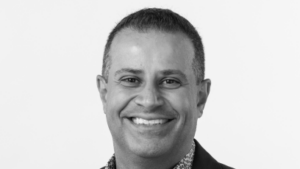
For this episode, I talk with Hesham Fahmy, chief information officer at TELUS, about how the telecom built momentum for its cloud journey, what happened along the way, and what it learned that other telcos should know. Hit play to hear our conversation about:
As Chief Information Officer at TELUS, Hesham Fahmy leads the team responsible for spearheading TELUS’ transformation to a fully-digital, software-centric and cloud-enabled organization. With a bachelor of computer engineering from McMaster University and a master of software engineering from the University of Toronto, Hesham has innovated software products and solutions for 25 years, including 19 in senior leadership roles. He has a track record of launching disruptive products and platforms in retail, IoT, fintech and development tooling.
The Telco in 20 podcast won a 2022 Gold Hermes Award and was recognized on Forrester’s 2021 list of the Top 100 Channel Podcasts and Feedspot’s Top 10 Telecom Podcasts list.
If you enjoy the podcast, would you leave us a short review? It takes you seconds to do in your app and it really makes a difference in helping to convince hard-to-get guests. And I love reading your feedback and reviews!
 Get my FREE newsletter, delivered every two weeks, with curated content to help telco execs across the globe move to the public cloud.
Set up a meeting with our team to learn how to tap the immense business value it can bring.

TELUS selected Google Cloud as its premier partner for several reasons: a commitment to co-innovation rather than just workload migration, the ability for TELUS to influence Google’s product roadmap as an early adopter, access to world-class software engineering talent that blends seamlessly with TELUS’s own teams, and a strong alignment on ESG and sustainability values. The partnership is structured as a 10-year strategic alliance, reflecting TELUS’s long-term ambition to become a truly cloud-native organization.
TELUS has set an ambitious target to move 80% of all its systems—spanning IT, BSS, OSS, and network workloads—to the public cloud by 2025. Rather than starting small, TELUS took a broad approach, inventorying all applications and mapping each to the right migration path, from lift-and-shift to full refactoring, then prioritizing them on a heat map to drive rapid, measurable progress.
TELUS used a “release train” model—structured migration sprints that application teams were required to join. Early trains had bumps, but teams quickly realized the move was less painful than feared and yielded real operational benefits. Critically, TELUS invested in internal PR: publicizing wins, showcasing performance improvements, and letting engineers vouch for the results. By release train 15 or 16, demand had flipped—teams were competing to get on board.
After early cloud migrations stalled on diminishing returns from easy workloads, TELUS pivoted to tackling its most complex, high-value applications—what CIO Hesham Fahmy calls “iconic apps.” Solving the hard problems on these apps creates reusable patterns that unblock many other migrations. It also delivers visible, meaningful business wins that shift skeptics into believers, accelerating the overall flywheel of change. Danielle Rios highlights this as a model other telcos should adopt: read her blog on setting BHAGs (Big Hairy Audacious Goals) and celebrating wins to build momentum.
Hesham Fahmy outlines a three-level refactoring framework. Level one is making applications stateless so they can autoscale in a Kubernetes environment. Level two involves migrating to cloud-native databases. Level three means rethinking application logic for event-driven architectures. Not every app needs to reach level three—some are best served by a well-executed lift-and-shift. The key is matching the right approach to each workload rather than applying a one-size-fits-all solution.
The biggest cultural challenge isn’t technical—it’s adapting to the dynamic nature of cloud environments. Unlike traditional on-premise operations, cloud means constant change: upgrading databases, workload shifts, deployments happening continuously. Hesham Fahmy and Danielle Rios both emphasize that teams need to embrace this dynamism. Episode 52 with Nathan Bell explores a similar digital transformation journey for additional context.

