 Apple Podcasts
  Spotify
  YouTube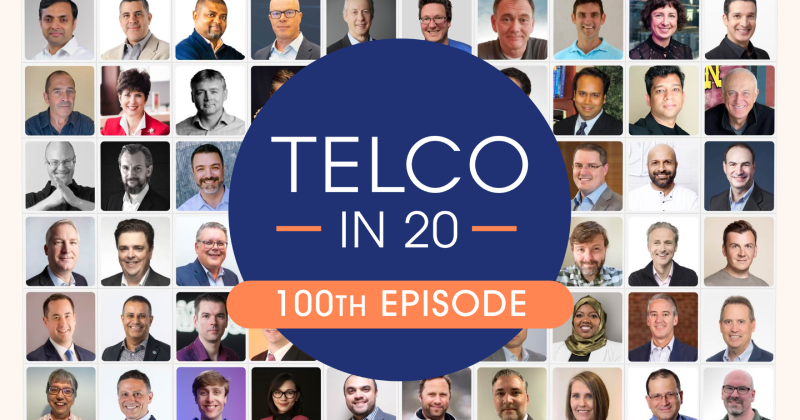
Ep 100 – The SPECIAL 100th episode of Telco in 20
In this milestone episode, we take a look at telecom's journey to the public cloud over the past four years and recap the game-changing moves that have pushed the industry forward.
Artificial intelligence (AI) is transforming industries at breakneck speed, with new capabilities emerging almost daily. As telcos race to harness its potential, questions around ethical use, safety, and practical implementation loom large.
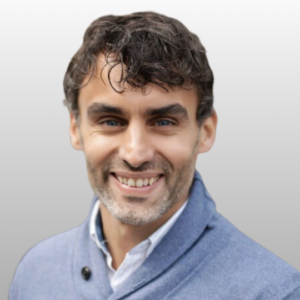
In this episode, I dive deep into the world of AI with Neerav Kingsland, head of business development at Anthropic, makers of the AI model Claude. The company is known for its use of “constitutional AI”—an approach that builds ethical guardrails into its AI systems. Listen now to hear:
Wanna talk AI and public cloud? Telco execs, set up a meeting with our team to learn how to tap the immense business value it can bring.
Neerav Kingsland is the head of business development at Anthropic. Prior to Anthropic, he was an executive coach to founders working on AI safety. Before working in AI, Neerav was the Managing Partner of City Fund, a national philanthropic organization backed by Reed Hasting, Steve Ballmer, and John Arnold. City Fund was created to scale the strategies that helped transform New Orleans public schools after Hurricane Katrina, where Neerav was a key leader. He is a graduate of Tulane University and Yale Law School.
The Telco in 20 podcast won 2024 and 2022 Hermes Awards, 2023 and 2022 MarComm Awards, and was recognized as a TeckNexus Top 12 Telco and Tech Podcast, Forrester Top 100 Channel Podcast and Feedspot Top 10 Telecom Podcast. If you enjoy the podcast, would you leave us a short review? It takes you seconds to do in your app and it really makes a difference in helping to convince hard-to-get guests. And I love reading your feedback and reviews!
 Get my FREE newsletter, delivered every two weeks, with curated content to help telco execs across the globe move to the public cloud.
Set up a meeting with our team to learn how to tap the immense business value it can bring.

Constitutional AI is Anthropic’s approach to building ethical guardrails directly into AI systems. Instead of relying on thousands of human contractors to shape AI values, Anthropic created a written constitution—publicly available on its website—that guides its model Claude’s behavior. This constitution draws from sources like the United Nation’s Universal Declaration of Human Rights and Apple’s trust and safety language. One AI system trains another based on whether it follows these rules, allowing more direct control and faster iteration while ensuring the AI reflects transparent, ethical values that enterprises can trust.
SK Telecom partnered with Anthropic in a $100 million deal to transform into an AI-first operator. The collaboration goes beyond simply using AI—it involves Anthropic’s researchers and engineers working directly with SK Telecom’s teams to build a telco-specific model. They started with customer service as low-hanging fruit but have an ambitious multi-year roadmap that includes developing a virtual agent. This partnership exemplifies a genuine commitment to transformation, with SK Telecom dedicating significant resources to shift its entire company toward AI-first operations.
Telco sits in a sweet spot where examining what AI can do today meets what industries need. Core telco functions and major cost drivers—like customer service, personalized marketing, field maintenance, and network routing—are capabilities that Anthropic’s Claude model can address right now. The industry’s data-rich environment, combined with opportunities for efficiency gains across customer interactions, physical infrastructure, and knowledge work, make it particularly well-suited for immediate AI implementation. Anthropic sees telco as an industry where AI can add immense value with current technology while building toward even more transformative future applications.
At Totogi, DR and her team combine generative AI with machine learning to create highly effective personalized marketing campaigns. They use machine learning to determine the right offer and generative AI to craft personalized messaging. While telcos typically see around 2% revenue improvement from traditional approaches, Totogi’s customers are experiencing 10% revenue improvement—a five-times increase. This success comes from bringing together siloed data from customer service, CRM, customer interactions, and network usage to gain rich insights into customer needs and network usage patterns. Find out how Totogi’s BSS Magic and PlanAI can help you turbocharge personalized marketing.
AI models will experience exponential growth over the next three to five years. According to Neerav Kingsland, large language models depend on three key inputs: chip quality and quantity, research and code quality, and data quality and quantity. With chips and research each improving two to three times annually, the combined effect is approximately 9x improvement yearly. This compounds to models potentially becoming 1,000 times more powerful within just five to six years. These improvements are already “baked in” to current development trajectories, meaning rapid capability increases are inevitable even with today’s technology foundation.
Even though current AI models may only handle 30-80% of certain tasks, operators need to begin transformation immediately. AI advancement happens through step function changes rather than linear incremental improvements, meaning significant jumps in capabilities arrive suddenly. Organizations must position their people, processes, and thinking now to capitalize on these advancements as they emerge. Starting today allows telcos to learn essential skills like prompting models, building evaluations, and fine-tuning systems. As Neerav emphasizes, this isn’t a place where companies want to get left behind—the technology is real, powerful, and already delivering results, making immediate adoption the best strategy for staying competitive.