Podcast

Ep 89 – What’s up with Totogi: The public cloud is perfect for Africa

This week’s guest

Telco in 20 Guest Shay Assaraf Totogi

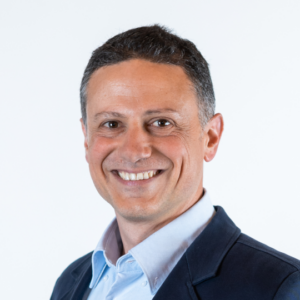
Shay Assaraf

Chief Marketing Officer Totogi

The hyperscalers are spending billions to build regions in Africa, setting the stage for the public cloud to revolutionize the continent’s telcos. With regulations easing and the number of affordable SaaS solutions growing, African telecoms are poised for an era of growth and success. 

Are the continent’s telcos ready to make the most of all the public cloud offers? In this episode, I talk with Shay Assaraf, Totogi’s chief marketing officer, about their progress with public cloud adoption and Totogi’s groundbreaking deal with Zain Sudan, a Tier 1 mobile network operator (MNO) in the region. Listen now to hear:

  • How all of the Big 3 hyperscalers are expanding their African footprint [04:57];
  • Examples of partnerships between African telcos and hyperscalers for connectivity, AI/ML, cloud computing and more [06:27];
  • Advice for navigating the continent’s data regulations and security concerns when adopting the public cloud [09:24]; and
  • How Totogi helped Zain Sudan to move off of its Ericsson charger in 18 days [15:03].

Links and resources

Wanna talk public cloud? Telco execs, set up a meeting with our team to learn how to tap the immense business value it can bring.


Guest bio

Shay is a seasoned tech B2B marketing executive with nearly 20 years of experience, specializing in positioning, go-to-market, product marketing and building growth marketing programs for disruptive technologies and practices. He currently serves as a CMO in Totogi where he is part of a leadership team aiming to help telcos monetize their networks through AI and the public cloud. He previously served as a CMO in Gentrack, Sapiens and Optiva, where he played a pivotal role in steering a significant strategic product and go-to-market shifts to enable growth through delivering value to customers and leveraging disruptive technologies and practices. 


Follow DR

The Telco in 20 podcast won 2022 and 2023 MarComm Awards, a 2022 Gold Hermes Award, and was recognized as a TeckNexus Top 12 Telco and Tech Podcast, Forrester Top 100 Channel Podcast, and Feedspot Top 10 Telecom Podcast. If you enjoy the podcast, would you leave us a short review? It takes you seconds to do in your app and it really makes a difference in helping to convince hard-to-get guests. And I love reading your feedback and reviews!

Podcast credits

  • Executive Producer and Host: Danielle Rios Royston, TelcoDR
  • Senior Producer: Lindsay Grubb, TillCo Media
  • Editor/Marketing: Alisa Jenkins, Springboard Marketing
  • Editing: Andrew Condell
  • Associate Producer: Kriselda Dionisio
  • Music: Dyami Wilson

Most popular podcasts

  1. Ep 108 – ☕ Wake up and smell the BSS with Ray Le Maistre from TelecomTV ☕
  2. Ep 107 – 🧣Wrapping your head around Responsible AI🧣 (Ferry Grijpink)
  3. Ep 105 – NVIDIA’s vision for AI and the RAN (Chris Penrose)
  4. Ep 100 – The SPECIAL 100th episode of Telco in 20

Follow now

Get my FREE newsletter, delivered every two weeks, with curated content to help telco execs across the globe move to the public cloud.

Wanna talk public cloud?

Set up a meeting with our team to learn how to tap the immense business value it can bring.

More episodes from Telco in 20

Frequently Asked Questions

1. Why is the public cloud particularly well-suited for African telcos?

The public cloud addresses critical challenges that African telcos face with on-premises infrastructure, including lengthy customs clearance for hardware, scarce telecom software talent, difficulty getting vendor support, and high costs for fuel and electricity to run data centers. The public cloud can lower TCO by up to 80% by eliminating unused hardware capacity needed for peak traffic and disaster recovery. It democratizes access to cutting-edge technology—custom silicon chips, state-of-the-art databases, and world-class software—that African telcos couldn’t access previously due to ARPU constraints and vendor economics. Learn more in DR’s blog on why the public cloud is perfect for Africa and check out McKinsey & Company’s recent report, Africa’s leap ahead into cloud: Opportunities and barriers.

2. Which hyperscalers have established regions in Africa and where are they located?

All three major hyperscalers have invested billions in African infrastructure. Microsoft Azure was first in 2019 with a region in Johannesburg, South Africa. AWS followed with a region in Cape Town, and Google Cloud announced its first South African region in early 2024. AWS also operates local zones—smaller, scaled-down facilities—in Kenya and Nigeria, bringing cloud services closer to telcos in those markets. These local zones serve as entry points for organizations to experiment with cloud services and typically expand into full regions as adoption grows.

3. How did Totogi help Zain Sudan modernize its charging system?

Totogi initially partnered with Zain Sudan to create a disaster recovery solution using Totogi Charging-as-a-Service on AWS. In just 18 days, Totogi integrated its charging solution with Zain’s network, implementing plans, promotions, custom rates for friends and family, roaming, and balance management. The deployment was so successful that Zain decided to completely swap out its legacy Ericsson charging system with Totogi’s modern platform, achieving up to 80% savings on total cost of ownership while gaining access to cutting-edge technology and AI capabilities—remarkable for a primarily 2G network.

4. Are African telcos allowed to use public cloud due to data regulations?

Despite common misconceptions, most African countries do allow public cloud usage. Research shows that 70% of telcos rank privacy and security as top concerns, but nine out of ten times these concerns are unfounded. Data protection authorities constantly evolve regulations, and most countries approve moving data to specific approved nations. Hyperscalers maintain very high security standards with advanced encryption for data both in transit and at rest. Telcos should research specific regulations, consult with security experts, and obtain necessary certifications rather than assuming prohibition. Take a look at our Hyperscaler Regions Tracker, which tracks live and planned regions across the globe.

5. What partnerships have African telcos formed with hyperscalers?

Major African telco groups have established strategic partnerships across all hyperscalers. Vodafone partnered with Microsoft Azure for a 10-year deal to scale M-PESA financial services and enhance digital literacy. It is also working with Amazon on Project Kuiper for low Earth orbit satellite connectivity and leveraging Google and Microsoft GenAI initiatives. MTN Group collaborates with Microsoft on satellite monitoring for weather early warnings and with Google Cloud on AI/ML-powered customer experience insights. Safaricom partners with both AWS and Google Cloud, offering open APIs to developers for cloud and AI applications.

6. What makes Danielle Rios’ and Totogi’s approach different from traditional telco vendors in Africa?

Traditional vendors like Netcracker, CSG, Amdocs, and Ericsson struggle to serve African markets due to lower ARPU and business challenges, often leaving telcos with substandard technology. TelcoDR and Totogi leverage a true multi-tenant SaaS architecture on public cloud, enabling dramatic cost savings that make world-class charging technology accessible regardless of network size or revenue level. Totogi works with telcos from 2G networks (technology from 1991) to new 5G MVNOs. Unlike single-instance vendors with heavy consulting models that skip Africa entirely, Totogi’s multi-tenant platform becomes stronger as more customers join, making the economics work for all operators.