
 Apple Podcasts
  Spotify
  YouTube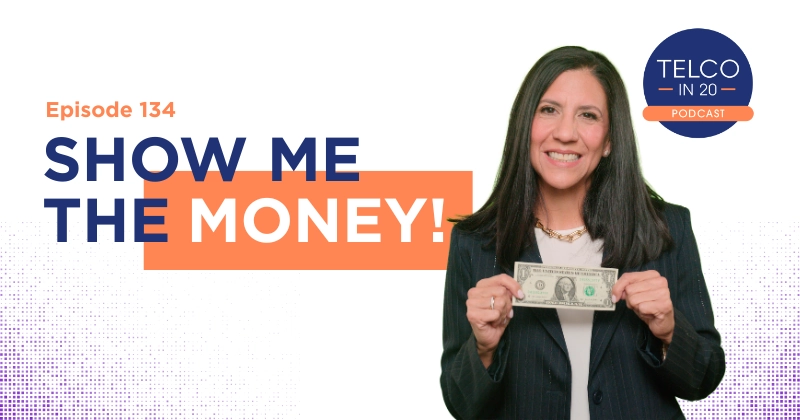
Ep 134 – Show me the money (MWC)
In this special episode, DR explains the one tough question you should be asking vendors before you buy AI and why the Totogi Ontology is key to delivering real world results.
Every telco exec is talking about AI agents. Almost nobody is talking about what those agents actually need to work: context.
Not just data — the logic, rules, and decision-making processes that define how your business actually operates. That knowledge currently lives in two places: buried in vendor code nobody fully understands, and inside people’s heads. No agentic system, no matter how shiny, can make decisions without it.
In this episode, I sit down with John Abraham, Partner and Principal Analyst at Appledore Research, to dig into why a lack of context is the real blocker for AI at scale, why most approaches only solve half the problem, and how an ontology gives AI the business logic it needs to not just analyze, but decide and act.
Listen now to hear:
Wanna talk AI and public cloud? Telco execs, set up a meeting with our team to learn how to tap the immense business value it can bring.
With over 16 years of experience in the telecom industry, John leads Appledore’s Digital Enablement & Monetization program. Previously, he was at Analysys Mason for 11 years, where he led the digital experience research segment as principal analyst. He has experience working with a varied client base on topics ranging from digitization benchmarking and procurement for CSPs; strategy and go-to market for vendors; and commercial and technical due diligence for financial institutions. Earlier, as a consultant at a BSS vendor, he led requirements gathering, solution definition, and implementation at multiple Tier-1 telcos in Asia and Europe. John holds a bachelor’s degree in computer science from Anna University (India) and an MBA from Bradford University School of Management (UK).
The Telco in 20 podcast is ranked in the top 5% of all podcasts globally by Listen Notes! 🎉 We’ve also won 2024 and 2025 MarCom Awards, 2024 and 2025 Hermes Creative Awards, and are recognized as a TeckNexus Top 12 Telco and Tech Podcast, Forrester Top 100 Channel Podcast and Feedspot Top 10 Telecom Podcast.
If you enjoy the podcast, would you leave us a review? It takes you seconds to do in your app and it really makes a difference in helping to convince hard-to-get guests. And I love reading your feedback and reviews!
 Get my FREE newsletter, delivered every two weeks, with curated content to help telco execs across the globe move to the public cloud.
Set up a meeting with our team to learn how to tap the immense business value it can bring.

According to John Abraham, partner and principal analyst at Appledore Research, the three Cs are cost, context, and communication. Cost involves both the price of AI and uncertainty around its value. Context means agents often operate partially blind, lacking the business logic needed to make decisions. Communication refers to the challenge of enabling AI agents to coordinate and understand each other’s intent. Without solving these, telcos risk creating a new generation of agentic silos.
Data lakes and APIs can move data, but they can’t capture how a business actually makes decisions. As John Abraham explains, the missing piece is the business logic layer—the rules and processes currently buried in vendor code or inside people’s heads. Without that knowledge graph and decisioning layer, AI agents are flying blind. Context isn’t just about data access; it’s about encoding what your business is and isn’t allowed to do. Learn more in the Appledore Research and Totogi white paper titled Telecom-specific Ontology, the key to AI-native telco.
An ontology has three components: a semantic layer (the “nouns” of your business—how things are defined and related), a kinetic layer (the “verbs” — how things interact and behave), and a dynamic layer (how decisions are made and actions are taken). Together, these give AI agents the full business context they need to act—not just access data. A data lake provides only the first layer; a full ontology enables AI to actually think and execute.
DR argues that AI models are commodities—everyone gets access to the same LLMs. What differentiates a telco is its context layer: the codified business rules, relationships, and decisioning logic unique to that operator. That knowledge compounds over time and is owned by the telco, not locked in a vendor’s system. DR believes it’s also why vendors like Amdocs keep that logic away from you. The Totogi Ontology is built specifically to give that ownership back to operators, making it the real investment layer that allows AI to scale.
No—and DR is direct about this. A data lake is, in her words, “a $20 million, multi-year side quest.” Even with clean data, you still need a way to act on it in live systems. The Totogi approach is to apply semantic consistency to systems of action now, start small with a focused use case, and build from there. A Tier-1 operator in the Middle East started with a dormant cell problem worth ~$1–2M and expanded to CXO-level fuel deployment decisions worth tens of millions—all on the same compounding ontology foundation. Learn more about this use case in the Telco in 20 episode: What’s up with Totogi: The biggest AI use case for telco.
Totogi started with a narrow problem: identifying dormant cells causing roughly $1–2 million in revenue loss for a Middle East Tier-1 operator. The AI identified the issue, the Totogi Ontology defined what actions were valid, and the system executed. No tickets, no human intervention. As more systems connected to the ontology, value compounded. The same foundation now supports CXO-level decisions on fuel deployment across the network, worth tens of millions of dollars. Every decision made the ontology smarter for the next one.