Podcast

Ep 133 – What’s up with Totogi: The biggest AI use case for telco

This week’s guest

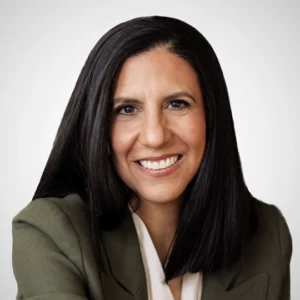
Danielle Rios

Founder and CEO Totogi

The telecom industry is full of AI projects that fail. Most operators think it’s a data problem—connect the systems, feed AI the information. But data doesn’t tell AI how to decide. Your processes do. Your rules do.

In this special “What’s Up with Totogi” episode, I flip the script and have my friend David Haselwood interview me about BSS Magic. We dig into what a breakthrough biology project from the 1990s can teach telcos about making AI work, why BSS Magic isn’t actually a BSS, and why vendor consolidation won’t fix your real problem. I also share stories from Tier-1 operators who tried horizontal AI vendors, failed—and then came to Totogi for AI that works.

Listen now to hear:

  • What BSS Magic is … and isn’t [03:23];
  • How we proved it’s the real deal at TelecomTV’s AI-Native Telco Summit  [06:39];
  • Why AI projects keep failing [08:59]; and
  • How Tier-1 operators are using BSS Magic to get real results [10:55].

Links and resources

Wanna talk AI and public cloud? Telco execs, set up a meeting with our team to learn how to tap the immense business value it can bring.


Guest bio

Danielle Rios (DR) is the founder and CEO of TelcoDR and Totogi, and host of the Telco in 20 podcast.


Follow DR

The Telco in 20 podcast is ranked in the top 5% of all podcasts globally by Listen Notes! 🎉 We’ve also won 2024 and 2025 MarCom Awards, 2024 and 2025 Hermes Creative Awards, and are recognized as a TeckNexus Top 12 Telco and Tech Podcast, Forrester Top 100 Channel Podcast and Feedspot Top 10 Telecom Podcast.

If you enjoy the podcast, would you leave us a review? It takes you seconds to do in your app and it really makes a difference in helping to convince hard-to-get guests. And I love reading your feedback and reviews!

Podcast credits

  • Executive Producer and Host: Danielle Rios, TelcoDR
  • Senior Producer: Lindsay Grubb, TillCo Media
  • Senior Editor/Brand Manager: Alisa Jenkins, Springboard Marketing
  • Audio Editor: Andrew Condell
  • Supervising Producer: Amanda Avery
  • Associate Producer: Kriselda Dionisio
  • Music: Dyami Wilson

Most popular podcasts

  1. Ep 108 – ☕ Wake up and smell the BSS with Ray Le Maistre from TelecomTV ☕
  2. Ep 107 – 🧣Wrapping your head around Responsible AI🧣 (Ferry Grijpink)
  3. Ep 105 – NVIDIA’s vision for AI and the RAN (Chris Penrose)
  4. Ep 100 – The SPECIAL 100th episode of Telco in 20

Follow now

Get my FREE newsletter, delivered every two weeks, with curated content to help telco execs across the globe move to the public cloud.

Wanna talk public cloud?

Set up a meeting with our team to learn how to tap the immense business value it can bring.

More episodes from Telco in 20

Frequently Asked Questions

1. What is BSS Magic and is it a traditional BSS suite?

Totogi’s BSS Magic is not a traditional BSS suite with multiple modules. It’s a three-layer product: the bottom data layer connects existing systems, the middle ontology layer establishes shared definitions and models how decisions get made, and the top AI layer enables applications and agents. Think of it like the gene ontology project that solved biology’s language problem in the 1990s—but pre-built for telcos from day one. BSS Magic works with operators’ already-installed systems rather than replacing them.

2. How did Totogi generate 600,000 lines of code at the Düsseldorf conference?

At TelecomTV’s 2025 AI-Native Telco Forum, Totogi demonstrated BSS Magic’s AI coding capabilities by generating 600,000 lines of code in eight hours (now achievable in about two hours). The ontology, based on TM Forum standards, gave Claude Opus 4.5 the context to create six clean new modules. To prove the demonstration wasn’t pre-recorded, the team added audience-requested features live—including SMS notifications built in 20 minutes. The goal was to demonstrate AI’s coding capabilities when given strict guardrails.

3. What real-world problem did BSS Magic solve for a Middle East/African operator?

A Middle East and Africa operator used BSS Magic to detect dormant cell towers—cells that quietly fail without triggering alarms. By connecting multiple systems (network equipment vendors, BSS, field service scheduling), the solution enabled something they’d never been able to calculate: prioritizing repairs by revenue impact. Resolution time dropped from 16 hours to 18 minutes. The solution now includes machine learning to predict failures before they occur—so the problem never happens in the first place.

4. Why can’t vendor consolidation solve telecom’s integration problems?

Vendor consolidation doesn’t solve the root cause: your systems don’t speak the same language. “Subscriber” means something different in billing than it does in CRM, care, or provisioning. Consolidating on fewer vendors might seem helpful because it creates one data model—but no single vendor provides end-to-end solutions for telcos. As long as multiple vendors exist (which is inevitable), you have a language problem. BSS Magic’s ontology solves this by creating a shared layer that works across all existing systems.

5. How does Totogi’s approach differ from typical AI vendor promises?

As Lulu Cheng Meservey noted, bragging about AI in 2026 is like bragging about cloud storage—customers want real value, not buzzwords. Telcos are drowning in AI hype from vendors that deliver failed projects. Totogi proves BSS Magic works through production deployments with nearly ten Tier-1 operators. Real examples include a Southeast Asian operator that tried horizontal AI vendors, failed—then used BSS Magic to cut an enterprise sales process from 5 minutes to 1 minute. That’s not a demo. That’s results.

6. What will Totogi showcase at MWC 2026 in Barcelona?

Danielle Rios and Team Totogi will be in Hall 2, booth 2G51 at MWC 2026 (March 2-5) demonstrating BSS Magic and the Totogi Ontology. They’ll share customer success stories from Tier-1 operators deploying the solution in production—with real revenue impact, not consulting reports. Connect with DR on LinkedIn or X @TelcoDR to schedule a meeting.