Podcast

Ep 93 – The NETWORK will be the reason telcos move to the public cloud

This week’s guest

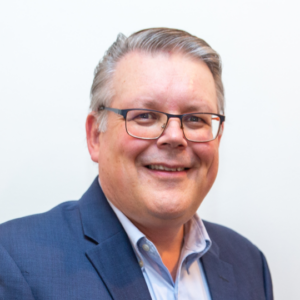
Juha Korhonen

Senior Telecom Executive & Transformation Leader

It’s hard to believe it’s been three years since CLOUD CITY stole the show at MWC 2021 and I boldly proclaimed the dawn of the public cloud era in telecom. It’s amazing how far the industry has come in its public cloud journey since then.

Juha Korhonen, a forward-thinking telco transformation leader, recognized the potential of the public cloud back then. At the time he was the head of innovation and digital services at Zain Group, where he was instrumental in launching Yaqoot, a digital mobile brand in Saudi Arabia. Since then, he has done a tour at Gartner as a senior advisor in BSS. I’ve invited Juha back to talk about where CSPs are today, how BSS and OSS are evolving, and the transformative power of AI across telco operations. Listen now to hear:

  • Telcos’ public cloud adoption trends across the globe [01:48];
  • Signs that telecoms are growing more comfortable using the public cloud [04:31], and even ready to think about moving network workloads [08:40]; 
  • The need for BSS and OSS to converge to deliver 5G monetization opportunities [11:07]; and
  • How AI can solve some of the industry’s biggest challenges [13:44].

Links and resources

Wanna talk public cloud? Telco execs, set up a meeting with our team to learn how to tap the immense business value it can bring. Or better yet, come find me at TM Forum’s DTW-Ignite in Copenhagen on June 18 – 20. Send me a DM on Linkedin or X @TelcoDR and we can set up a time to meet. Team Totogi will be in the AWS stand as a Featured Partner, so stop by to catch a demo of Totogi’s BSS Magic.


Guest bio

Juha Korhonen is a telecom industry veteran. In his 25+ years of industry experience, he has held C-level roles, including group director of digital and innovation with Zain Group, and chief commercial officer for Zain Saudi Arabia and Wataniya Telecom in Kuwait. Lately, Juha worked as senior director, advisor at Gartner. Juha started his career in Europe with Telecom Finland and moved to the US to lead its mobile startup Zed. He has led reimagine and reinvention efforts at traditional operators. He built, launched, and operated a fully digital operator B-Brand called Yaqoot in 2020. Juha lives in the state of New Jersey in the USA, and he is married with three children.


Follow DR

The Telco in 20 podcast won 2024 and 2022 Hermes Awards, 2023 and 2022 MarComm Awards, and was recognized as a TeckNexus Top 12 Telco and Tech Podcast, Forrester Top 100 Channel Podcast and Feedspot Top 10 Telecom Podcast. If you enjoy the podcast, would you leave us a short review? It takes you seconds to do in your app and it really makes a difference in helping to convince hard-to-get guests. And I love reading your feedback and reviews!

Podcast credits

  • Executive Producer and Host: Danielle Rios Royston, TelcoDR
  • Senior Producer: Lindsay Grubb, TillCo Media
  • Senior Editor/Brand Manager: Alisa Jenkins, Springboard Marketing
  • Audio Editor: Andrew Condell
  • Supervising Producer: Amanda Avery
  • Associate Producer: Kriselda Dionisio
  • Music: Dyami Wilson

Most popular podcasts

  1. Ep 108 – ☕ Wake up and smell the BSS with Ray Le Maistre from TelecomTV ☕
  2. Ep 107 – 🧣Wrapping your head around Responsible AI🧣 (Ferry Grijpink)
  3. Ep 105 – NVIDIA’s vision for AI and the RAN (Chris Penrose)
  4. Ep 100 – The SPECIAL 100th episode of Telco in 20

Follow now

Get my FREE newsletter, delivered every two weeks, with curated content to help telco execs across the globe move to the public cloud.

Wanna talk public cloud?

Set up a meeting with our team to learn how to tap the immense business value it can bring.

More episodes from Telco in 20

Frequently Asked Questions

1. What are the main differences in how telcos across different regions are approaching cloud adoption?

The US has advanced cloud technology but telcos struggle with legacy systems and focus on sales execution over product innovation. Asian operators, especially in China, are pushing large-scale BSS transformations and using blockchain for network sharing. European telcos face challenges with too many operators in small markets but are exploring innovative uses like electric vehicle charging. African markets, with funding constraints, show openness to new technologies like AI and public cloud solutions.

2. Why aren’t some telcos seeing cost savings when moving to the public cloud?

Many telcos fail to realize savings because they’re buying public cloud services on a capacity basis instead of consumption-based models. They lift-and-shift legacy systems without decommissioning old infrastructure, creating additional costs rather than savings. Success requires changing procurement practices, implementing proper FinOps operations, daily cloud cost optimization, and transitioning from annual planning cycles to consumption-based financial models that can handle month-to-month invoice variations.

3. Which network workloads are telcos moving to the public cloud?

Network workloads are increasingly moving to the public cloud, with significant examples such as AT&T’s partnership with Microsoft for its 5G core network through Azure Nexus, and e& from UAE also adopting Nexus. DISH Network built its entire network on AWS at approximately 20% of traditional network build-out costs. These moves demonstrate growing comfort with running core network functions on public cloud infrastructure, which will ultimately convince operators this approach is viable.

4. Why do Danielle Rios and Juha Korhonen believe BSS and OSS need to converge?

According to the podcast discussion, telcos must move from best-effort networks to guaranteed quality networks to support future applications like autonomous vehicles and drones. The traditional separation where OSS manages networks and BSS handles customer processes cannot continue. Convergence is essential for 5G monetization. Without this integration, telcos risk becoming commodity utilities, unable to differentiate through customer experience and/or support advanced use cases requiring consistent network quality.

5. How can AI solve telecom’s biggest operational challenges?

AI can automate code writing for digital transformation, helping telcos migrate from legacy to modern systems. It can simplify decades-old product catalogs with complex structures that nobody understands anymore. AI can optimize customer groupings, automate cloud operations, and improve customer interactions, targeted marketing, and product design. AI’s ability to figure out complex problems that humans struggle with could revolutionize how telcos handle change requests, potentially replacing the traditional vendor-driven development cycle with natural language interfaces.

6. How can telcos using Totogi’s solutions maximize their public cloud investment?

Telcos should shift from CapEx to OpEx software buying to remain agile with rapid technological changes. Totogi offers pay-as-you-grow SaaS models that align with consumption-based pricing rather than committed capacity models. This approach eliminates large upfront vendor payments, provides continuous updates without costly upgrades, and allows businesses to scale quickly. The model reduces financial risk, frees capital for other investments, and ensures access to the latest features—maximizing the flexibility that public cloud infrastructure provides.