
 Apple Podcasts
  Spotify
  YouTube
Ep 136 – MWC26 Wrap Up (Mobile World Live)
DR joins the Mobile World Live podcast to unpack the biggest takeaways from MWC26.
Hyperscaler CAPEX investments are staggering: Amazon, Google, Microsoft, and Meta spent more than $400 billion on infrastructure in 2025 and are expected to reach over $600 billion in 2026. They’re on pace to surpass $2 trillion in cumulative CAPEX spend before the year is over. Meanwhile, U.S. telco CAPEX sits at $50 billion for 2025—and it’s shrinking.
For this episode, Charles Fitzgerald, Managing Director at Platformonomics, returns for his fourth (!) appearance on Telco in 20 to break down his tenth annual Follow the CAPEX report. We dive into the hyperscaler spending surge, the two big telco AI plays coming out of MWC 2026—sovereign cloud and AI-RAN, and why the gap between infrastructure spenders and operators is impossible to close.
Listen now to hear:
Wanna talk AI and public cloud? Telco execs, set up a meeting with our team to learn how to tap the immense business value it can bring.
Charles Fitzgerald is a Seattle-based angel investor, with a focus on developer platforms and infrastructure. Previously, he spent 20+ years working on platform businesses at Microsoft and VMware. He can see the cloud from his house.
The Telco in 20 podcast is ranked in the top 5% of all podcasts globally by Listen Notes! 🎉 We’ve also won 2024 and 2025 MarCom Awards, 2024 and 2025 Hermes Creative Awards, and are recognized as a TeckNexus Top 12 Telco and Tech Podcast, Forrester Top 100 Channel Podcast and Feedspot Top 10 Telecom Podcast.
If you enjoy the podcast, would you leave us a review? It takes you seconds to do in your app and it really makes a difference in helping to convince hard-to-get guests. And I love reading your feedback and reviews!
 Get my FREE newsletter, delivered every two weeks, with curated content to help telco execs across the globe move to the public cloud.
Set up a meeting with our team to learn how to tap the immense business value it can bring.

Amazon, Google, Microsoft, and Meta collectively spent over $400 billion on infrastructure in 2025—up 66% from the prior year—and are guiding to more than $600 billion in 2026. They will surpass $2 trillion in cumulative CAPEX before the year is over. Ten years ago, this same group spent only $28 billion combined. The inflection point was the launch of ChatGPT in November 2022, after which their CAPEX growth rates doubled and absolute spend nearly tripled. Read Charles Fitzgerald’s full Follow the CAPEX report.
Not on raw spend. U.S. telco CAPEX sits at roughly $50 billion—and it’s falling—while Meta alone outspent all three major U.S. telcos combined, with $20 billion to spare. As Charles Fitzgerald puts it, telcos are integrators and operators: they buy and operate technology, they don’t create it. That distinction is decisive when you’re competing against companies with tens of thousands of software engineers and hundreds of globally distributed data centers.
Sovereign cloud bets that local regulations will favor local players over hyperscalers. But building competitive cloud infrastructure means constructing the software layer from scratch—something telcos have never done. When Charles searches “sovereign cloud,” the results are dominated by hyperscalers, not telcos. The EU’s Euro3C consortium, led by Telefónica, has committed €75 million—a figure Charles describes as a rounding error against hyperscaler spend. His verdict: telcos have probably already missed this boat.
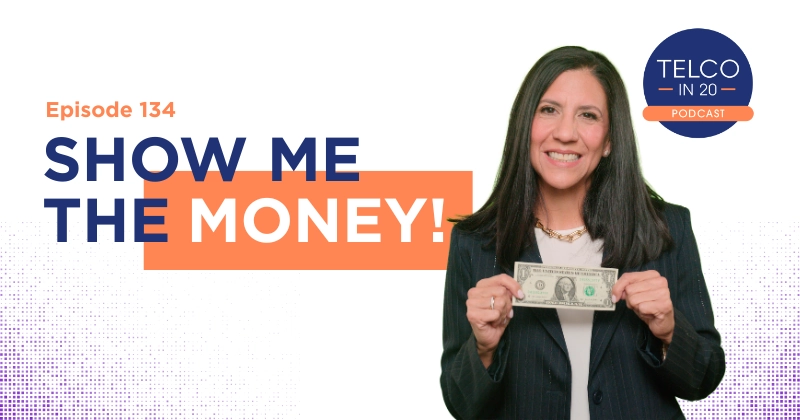
Danielle Rios points out that people underestimate how much of the hyperscaler advantage is software, not just infrastructure. The big clouds don’t just build data centers—they build the sophisticated tooling that helps customers create and manage workloads at scale. Telcos have never had that capability, and you can’t buy it off the shelf. DR also flags the AI hardware refresh cycle—18 to 24 months—as a treadmill telcos can’t keep up with. Watch DR’s MWC26 Agentic AI Summit talk, Show Me the Money.
It’s the most instructive cautionary tale in tech right now. Oracle dismissed cloud for years, then lost half its database market share and scrambled to catch up from a nearly standing start. Despite borrowing heavily and spending over $3 in CAPEX for every dollar of cloud revenue (versus AWS’s ~$0.75), Oracle’s cloud business remains small and its free cash flow deeply negative. At least Oracle can write software. Telcos can’t even claim that advantage.
DR’s takeaway is that telcos need to compete on what compounds for them: deep operational knowledge. Rating rules, provisioning workflows, product specs—this knowledge currently sits locked in vendor code and people’s heads, invisible to AI systems. The Totogi Ontology captures that knowledge and makes it executable, so AI can act across systems. Every action—resolving a dispute, applying an offer, provisioning a service—makes the next decision smarter. Revenue goes up, costs go down, and unlike hardware, the advantage widens every day. Read the Appledore Research report on Totogi’s telecom-specific ontology.