 Apple Podcasts
 Spotify
 YouTube
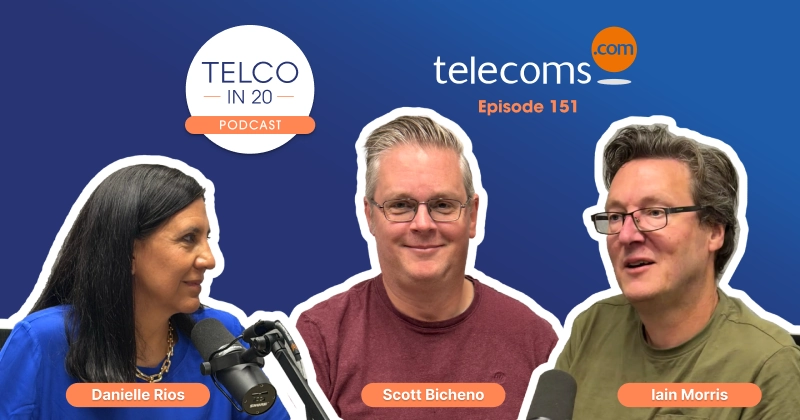
Ep 151 – TL;DR: Telecoms.com (Scott Bicheno/Iain Morris)
DR and Telecoms.com’s Scott Bicheno and Iain Morris dig into rogue AI, the SaaSpocalypse, and the Totogi Ontology.
In the first half of 2026, telcos spent $65 billion on mergers: Charter and Cox, Vodafone and Three, Fastweb and Vodafone Italy. Every one of those deals leaves somebody with two of everything and years of work to untangle it all. So what do you do with hundreds of systems?
I sat down with Max Gasparroni, chief technology and security officer at Fastweb + Vodafone. He inherited up to 450 systems to rationalize and tens of thousands of nodes in the mobile core, and he’s rolling out AI at the same time. He’s more than halfway through and ahead of plan.
Listen now to hear:
Wanna talk AI and public cloud? Telco execs, set up a meeting with our team to learn how to tap the immense business value it can bring.
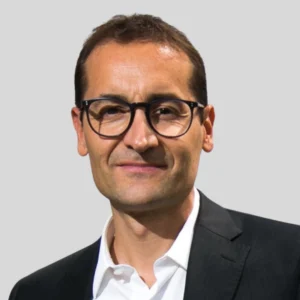
Max Gasparroni is chief technology and security officer of Fastweb + Vodafone and a member of the Executive Committee. He has over 25 years of experience in the Telco and IT sector. He has served as vice president at Liberty Global UK, where he led the development of 5G mobile services and cloud solutions. Prior to that, he built his career at Vodafone UK and Ireland, holding increasingly senior roles over two decades, eventually becoming chief technology officer. In this role, he was responsible for defining strategies for infrastructure deployment, 4G standard development, and business technology solutions across eight European markets. He began his career at Cefriel in Milan before moving to the UK in 1999 to work at Motorola on mobile network development.
The Telco in 20 podcast is ranked in the top 5% of all podcasts globally by Listen Notes! 🎉 We’ve also won 2026, 2025, and 2024 Hermes Creative Awards, 2025 and 2024 MarCom Awards, and are recognized as a TeckNexus Top 12 Telco and Tech Podcast, Forrester Top 100 Channel Podcast, and Feedspot Top 10 Telecom Podcast.
If you enjoy the podcast, would you leave us a review? It takes you seconds to do in your app and it really makes a difference in helping to convince hard-to-get guests. And I love reading your feedback and reviews!
 Get my FREE newsletter, delivered every two weeks, with curated content to help telco execs across the globe move to the public cloud.
Set up a meeting with our team to learn how to tap the immense business value it can bring.

Max Gasparroni, chief technology and security officer at Fastweb + Vodafone, says the deal created a leading converged challenger in Italy by combining Fastweb’s fixed-line and fiber heritage with Vodafone’s mobile infrastructure. The logic is scale: a more efficient cost structure and more capacity to invest in new technology. The company promised about €600 million in annual run-rate synergies and is already exceeding its plan on synergy realization.
Beyond tens of thousands of mobile core network nodes, Max Gasparroni says there are 350 to 450 overlapping systems to rationalize. The team starts by interconnecting the two networks, then migrates services from one node to another so legacy systems can be decommissioned. In some cases, they build a new, more future-proof system first, move services onto it, then retire the old one. Other telco mergers face the same duplication.
Max Gasparroni tells his team AI is “an existential journey,” because fixed and mobile networks must soon support mission-critical applications like driverless cars and agentic AI. A dedicated team called DNA (Digital Network and AI) implements use cases to create a flywheel effect. Max expects more than 20 use cases this year and level four automation in parts of the network within three to five years, built incrementally.
Max Gasparroni says the team started by building one data platform, because identifying the clean, minimum set of data is critical. More data requires more processing power and time, which defeats the purpose of use cases like fixing slow network issue resolution. This data foundation underpins Fastweb + Vodafone’s network automation work, starting with areas like network operations where the benefits are greatest.
DR, host of Telco in 20 and CEO of Totogi, says to start from the desired outcome rather than finding places to use AI. She looks for “million-euro problems” like reducing churn, eliminating fraud, or cutting network outages, where you can put a number on the result. This earns business support and gives technical teams a big idea to contribute to, easing fears that AI threatens their value.
Danielle Rios says a merger gives telcos peak leverage, because two of every contract means only one vendor survives. Rather than negotiating a one-time discount, she advises deciding which vendors you no longer need, so that spend never returns. The Totogi Ontology maps both stacks into one model you own, so knowledge of how your offers work stays inside your company instead of being billed back hourly by consultants.